
Portfolio
New York Life / AARP
New York Life serves as the exclusive life and long-term care insurance provider for AARP's 37 million members, a demographic that skews 55+ and relies disproportionately on assistive technologies, making accessibility a primary design constraint rather than a compliance afterthought. The engagement called for pixel-perfect, responsive web page builds translated directly from high-fidelity design wireframes - serving as the primary UX development contact and owning all front-end deliverables, including a reusable component library and style guide built to serve future development teams long after project completion.
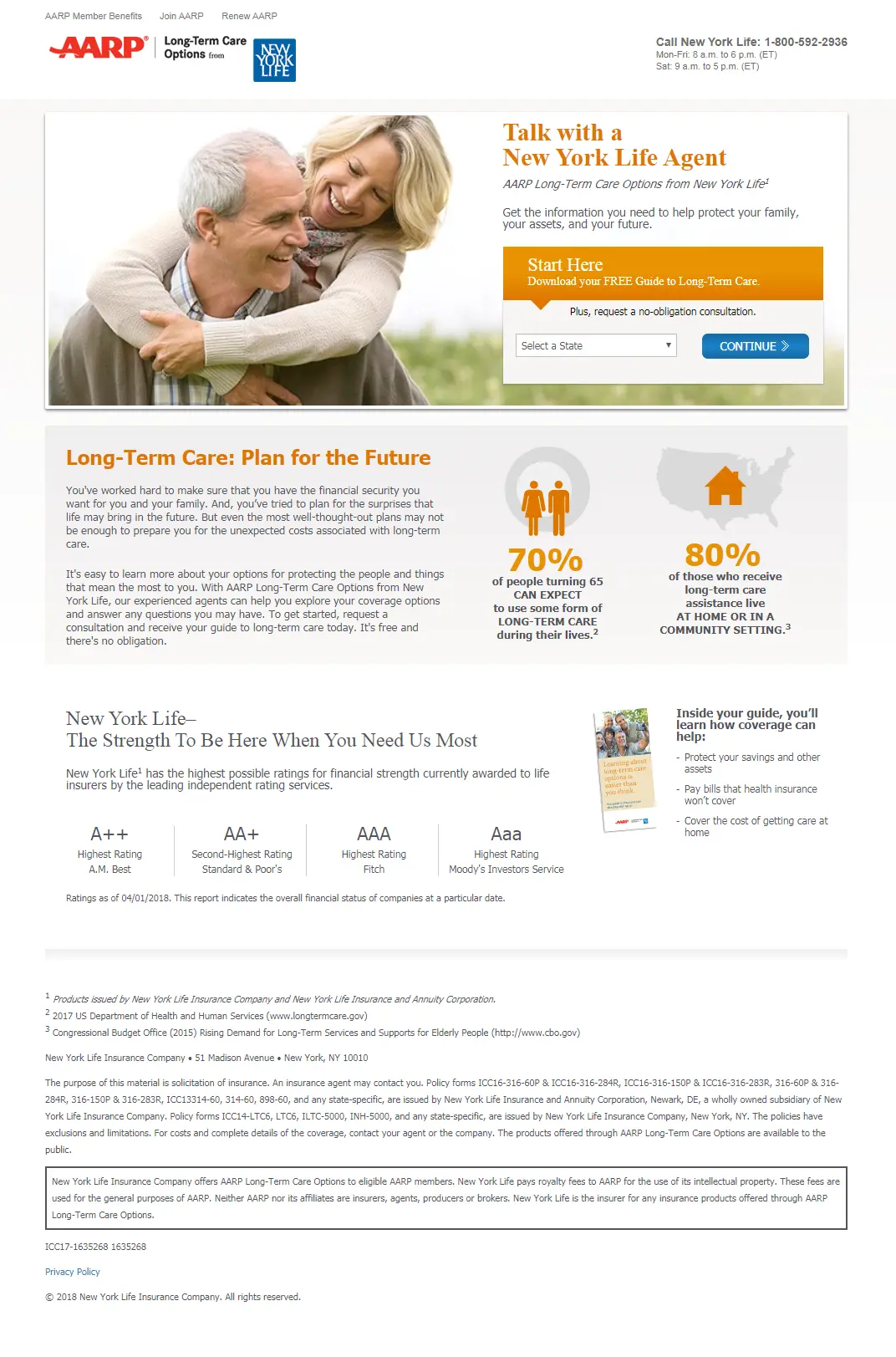
Landing Page Layout
Partnered with the New York Life / AARP web team to deliver pixel-perfect, responsive page builds directly from high-fidelity wireframes - serving as the primary UX development contact and owning all front-end deliverables for one of the most widely distributed insurance platforms in the country.
Collaboration
The NYL design team had an established library of desktop page templates prior to this engagement. The role focused on advancing those templates from static desktop layouts into fully responsive landing pages, refining the CSS architecture and layout structure to perform across the breakpoints required for an upcoming marketing campaign push, where mobile visibility was the primary delivery target. The reusable component library and style guide delivered alongside those builds gave the development team a documented, extensible system they could own and build on independently after the engagement closed.
Responsive Development
Responsive breakpoint implementation was a core technical deliverable; each page was tested across a full range of devices including iOS and Android (Samsung, Google) to validate layout, typography, and component behavior at every viewport. Ensuring fidelity across that device matrix on a high-visibility campaign required iterative refinement at each breakpoint.
Accessibility
Given that AARP's membership skews 55+, accessibility was not a secondary consideration; it was a primary design constraint. All sections were built to meet 508 and WCAG compliance standards, with additional attention to legibility, contrast, and navigability for an older demographic that statistically relies more heavily on assistive technologies.